
Lavrov's comments came two days after Russia accused the US of attempting to prevent India and other countries from buying Russian oil, saying Washington was using a wide range of 'coercive' measures, including tariffs, sanctions and direct prohibitions.

The Indian men's hockey team, currently in the Dutch leg of the FIH Pro League, aims to conclude their campaign on a high note against hosts Netherlands. This tournament serves as crucial preparation for the upcoming World Cup and Asian Games, with coach Craig Fulton focusing on testing resources and addressing issues like conceding late goals. The team also looks forward to significant matches against England and arch-rivals Pakistan in London.

Analysts predict that the ongoing conflict in West Asia, crude oil prices, and global trends will significantly influence the Indian stock market in the upcoming holiday-shortened week. Foreign investor activity and rupee movement will also be crucial.

The Indian government has not yet responded to Trump's comments yet.

'It's very important for India to retain its sovereignty. India should not sign any agreement which compromises its sovereignty.'

The Indian government has restricted industrial, commercial, and institutional users from purchasing petrol and diesel from retail petrol pumps, directing them to bulk sale points instead. This move, which can last up to 90 days, aims to address abnormal demand growth and prevent localised shortages caused by a significant price difference between retail and bulk fuel prices.

The primary objective should be to figure out a way to grow at 7 to 7.5 per cent with inflation around 4 per cent. Any policy that can help us get there must be experimented with. Those that work should stay. Those that do not should go, suggests Karan Bhasin.

An Indian-flagged crude tanker safely departed from the UAE's Fujairah after loading oil, despite an attack on the oil terminal. The Indian government is closely monitoring the situation in West Asia to ensure stable fuel supplies and maritime safety.

An Indian-flagged LPG vessel successfully transited the Strait of Hormuz, reducing the number of Indian ships stranded in the Persian Gulf. India is in talks with Iran to ensure safe passage for its tankers, and Indian refiners continue to purchase crude oil and LPG from Iran despite regional tensions.

Aviation fuel prices for domestic airlines remain unchanged, providing stability for local carriers, while commercial LPG and 5-kg cylinders see a significant rate hike due to rising international energy costs.

State-owned Life Insurance Corporation of India (LIC) has reported a net profit of over Rs 23,400 crore for the January-March quarter, making it the highest profit-making firm in the Indian financial sector during this period, surpassing major banks like SBI and HDFC Bank.

India will maintain multiple sources for crude oil purchases and diversify them to ensure stability in the supply chain with national interests remaining the "guiding factor" for the procurement, Foreign Secretary Vikram Misri said.
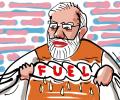
Following through announcements with enforcement of measures is key, as a run through recent Indian economic history shows, points out A K Bhattacharya.

Much will depend on how the protagonists use the current interlude to work proactively for the beginning of a durable settlement or, on the contrary, prepare for a new round of escalation, points out Ambassador M K Bhadrakumar.
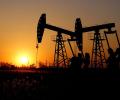
India possesses approximately 100 million barrels of commercial crude oil stocks, capable of covering 40-45 days of its requirements if flows through the Strait of Hormuz are disrupted, according to Kpler.

Indian equity benchmark indices Sensex and Nifty closed lower on Thursday, driven by escalating tensions between the US and Iran, persistent foreign fund outflows, and concerns over rising US inflation.

Insights from behavioural economics suggest that an ambitious nudge can be effective if three conditions are met, points out Ram Singh Insights from behavioural economics suggest that an ambitious nudge can be effective if three conditions are met, points out Ram Singh, director, Delhi School of Economics.

Indian benchmark equity indices, the BSE Sensex and NSE Nifty, experienced a significant drop in early trade due to elevated oil prices, weak global market trends, and renewed fears of military operations in the Middle East following US President Donald Trump's statements regarding Iran. Track Sensex, Nifty on May 20.

A tanker carrying liquefied petroleum gas (LPG) for India has successfully navigated the Strait of Hormuz and is en route to Visakhapatnam, India, carrying enough cargo to meet half a day's requirement for the country.

Indian benchmark indices Sensex and Nifty experienced a decline in early trade, mirroring weak global market trends and persistent outflows from foreign institutional investors (FIIs), exacerbated by ongoing geopolitical uncertainties in West Asia.

The Indian rupee is highly vulnerable among Asian currencies, with Barclays and MUFG warning of a potential depreciation towards 100/$ if the West Asia conflict persists, driven by widening current account deficits and elevated crude oil prices.

Foreign Portfolio Investors (FPIs) withdrew nearly Rs 33,000 crore from Indian equities in May, bringing the total outflow for 2026 to Rs 2.25 lakh crore, driven by weak earnings growth, rupee depreciation, and more attractive opportunities in other global markets.
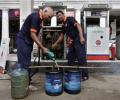
A Monaco-based fuel technology company, FOWE Eco Solutions, claims its patented Cavitech fuel emulsion technology can help India reduce fuel consumption, emissions, and improve equipment performance by using water in a fuel-oil-water emulsion.
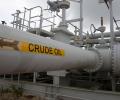
The Kremlin states it has not received confirmation from India regarding a halt to Russian oil purchases, following claims made by former US President Donald Trump. Russia affirms its commitment to strengthening relations with India.

Indian equity benchmark indices Sensex and Nifty declined in early trade, driven by persistent concerns over the unresolved US-Iran situation and continued outflows from foreign institutional investors.

The support will be provided to oil-marketing companies (OMCs) in the form of interest-free advances through the ministry of petroleum and natural gas. The OMCs, in turn, will use the fund to provide ATF price stabilisation support to Indian carriers operating domestic and international flights.
A Monaco-based fuel technology company, FOWE Eco Solutions, claims its patented Cavitech fuel emulsion technology can help industries slash fuel consumption, reduce emissions, and improve equipment performance by using water.

Despite backing from the team management, Washington Sundar's inconsistent usage with both bat and ball has raised questions over his undefined role, with Ravichandran Ashwin urging India to utilise him more clearly as a genuine all-rounder.

The Indian government has issued a stern warning to industrial users who are reportedly procuring cheaper retail fuel instead of industrial-grade fuel, leading to significant losses for state-run oil marketing companies (OMCs) and potential local shortages. This diversion, driven by a substantial price difference between retail and bulk diesel, is adversely impacting OMCs, which are absorbing daily losses of approximately 550 crore to keep retail prices stable.

Greer said that India has taken down some digital services taxes and is moving tariffs down.
Indian benchmark indices Sensex and Nifty closed lower for the second consecutive day, driven by investor caution over conflicting geopolitical signals from West Asia and fresh foreign institutional investor (FII) outflows.

Net mutual fund inflows into active equity schemes in India plummeted by 40 per cent month-on-month in May, reaching a one-year low of 22,908 crore, primarily due to weaker lump-sum investments and increased redemptions amidst significant market volatility and global uncertainties.

Discover the inspiring journey of Komal Prabhu, called the Queen of GSB Cuisine, that saw her switch professions -- a Bharata Natyam dancer became a celebrated chef devoted to preserving traditional Gaud Saraswat Brahmin food traditions.

Indian benchmark equity indices, Sensex and Nifty, ended lower after a five-day rally, with the Sensex dropping 607 points and the Nifty falling to 24,013.10. The decline was primarily driven by heavy selling in IT firms following Accenture's trimmed revenue guidance and renewed geopolitical uncertainty, specifically the postponement of US-Iran negotiations.

India emerged reasonably well from 2025. But now, the oil shock and war-related supply disruptions have again driven funds out of India and significantly weakened the rupee, points out Ajay Chhibber.

Indian equities are experiencing their sharpest rebound in years, with the BSE 500 index rallying 12.1 per cent so far this month, echoing Covid-era recoveries despite ongoing geopolitical uncertainty and earnings risks.

India's Central government is likely to see its fertiliser subsidy bill double to a record 3.4 trillion in FY27, up from the Budget estimate of 1.7 trillion, due to surging global fertiliser prices exacerbated by the West Asia war. This significant increase, coupled with revenue losses from excise duty cuts for oil-marketing companies, is straining the government's fiscal space, though capital expenditure plans remain unchanged.

Most members of the Reserve Bank of India's Monetary Policy Committee (MPC) expressed concerns about inflation becoming generalised and highlighted uncertainties surrounding both inflation and growth prospects due to the West Asia conflict, according to the recently released minutes.

The rupee weakened to a record low against the US dollar due to Gulf tensions, rising oil prices, and foreign capital outflows.

Indian benchmark stock indices Sensex and Nifty rebounded nearly 1 per cent, snapping a three-day decline, driven by rallies in Reliance Industries and Sun Pharma, alongside positive global market trends and easing geopolitical tensions.
